In the same week in October 2026, Decathlon Malaysia had a beginner paddle at RM59 and a Malaysian specialist shop listed one at RM1,104. Both are flat, roughly the same size, and hit the same ball. So what does the extra RM1,000 buy?
Some of it is real: better materials, a more complex build, tighter quality control and a longer warranty. Some of it is brand, pro sponsorship and import costs. And some of what you buy is a paddle that, for a beginner, plays no better than one at a fifth of the price. Here’s how to tell which is which.
We haven’t tested the paddles mentioned. Prices are from Malaysian retailers’ pages and were checked in October 2026.
What changes as the price goes up
| Price band | Typical face | Typical build | Who it suits |
|---|---|---|---|
| Under RM150 | Fibreglass or basic composite | Polypropylene honeycomb core, glued and pressed | Learning, spares, a set for the family |
| RM150 to RM400 | Carbon fibre, often T700 | Honeycomb core, sometimes with foam around the edge | A first “real” paddle |
| RM400 to RM700 | Raw carbon, textured for spin | Usually thermoformed (moulded with heat and pressure) | Regular players who know what they like |
| RM800 and up | Raw carbon, sometimes with longer-lasting textures | Thermoformed, often with foam or full-foam cores | Players chasing a particular feel |
Examples at each price are in our guide to choosing your first paddle. The bands overlap a lot, and some cheap paddles copy the build of expensive ones.
The face: fibreglass, carbon and raw carbon
The face is the hitting surface, a thin skin over the core.
- Fibreglass is the cheapest common face. It flexes more, so the ball comes off with easy power, but you get less control and less “feel” for soft shots.
- Carbon fibre is stiffer and lighter. It gives more control and a more even response across the face. “T700” is a grade of carbon fibre from the Japanese maker Toray, and you’ll see it on paddles from about RM169, such as the Carlton WaveFlex at Sports Direct.
- Raw carbon means the carbon weave is left uncoated and textured, so it grips the ball for spin. Most premium paddles use it.
Here’s the catch with spin: grit wears off. Pickleball Union notes that traditional raw carbon faces can lose effective grit “surprisingly fast”. If you play three to five times a week, it expects some drop-off in about two to four months. Some brands now sell longer-lasting textures, which is part of what you pay for at the top end.
The core and the build
The core is the thick middle layer, usually 13 to 16mm. How it’s made has changed fast in the last few years. Pickleball Union describes the stages roughly like this:
- Cold-pressed honeycomb: a polypropylene honeycomb core with faces glued on. Soft and control-oriented. Most cheap paddles are still built this way.
- Thermoformed honeycomb: the paddle is moulded with heat and pressure into one sealed unit, with a stiffer edge. More pop and stability.
- Honeycomb with foam: foam is added around the edge or inside, for more power and a steadier sweet spot.
- Full-foam cores: the honeycomb is replaced with foam, for a more consistent feel.
- Multi-foam designs: several foams tuned for different parts of the face.
These “generations” are informal labels used by brands and reviewers, not official categories, so treat “Gen 4” or “Gen 5” on a box as marketing shorthand.
Thermoforming and foam make paddles feel better and more powerful, but they cost more to make and can fail in new ways. Pickleball Central notes that the heat and pressure of thermoforming raise the chance of a paddle failing over time.
Brand, pros and import costs
Not every ringgit goes into the paddle. Big brands pay pro players, fund tours, run marketing and offer warranty service, and that’s priced in. Imported paddles also carry shipping, distribution and the dealer’s margin before they reach a Malaysian shelf.
How much does that matter on court? Pickleball Union’s look at tech versus branding found that most paddles under about US$150 share very similar construction, and that some private-label paddles under US$80 play well while some US$200 “premium” paddles feel inconsistent. Brands do differ in quality control, though: how closely each paddle matches its listed weight, and how many faulty ones the factory throws out. That’s harder to see from a spec sheet, and it’s part of what a known brand charges for.
How paddles wear out
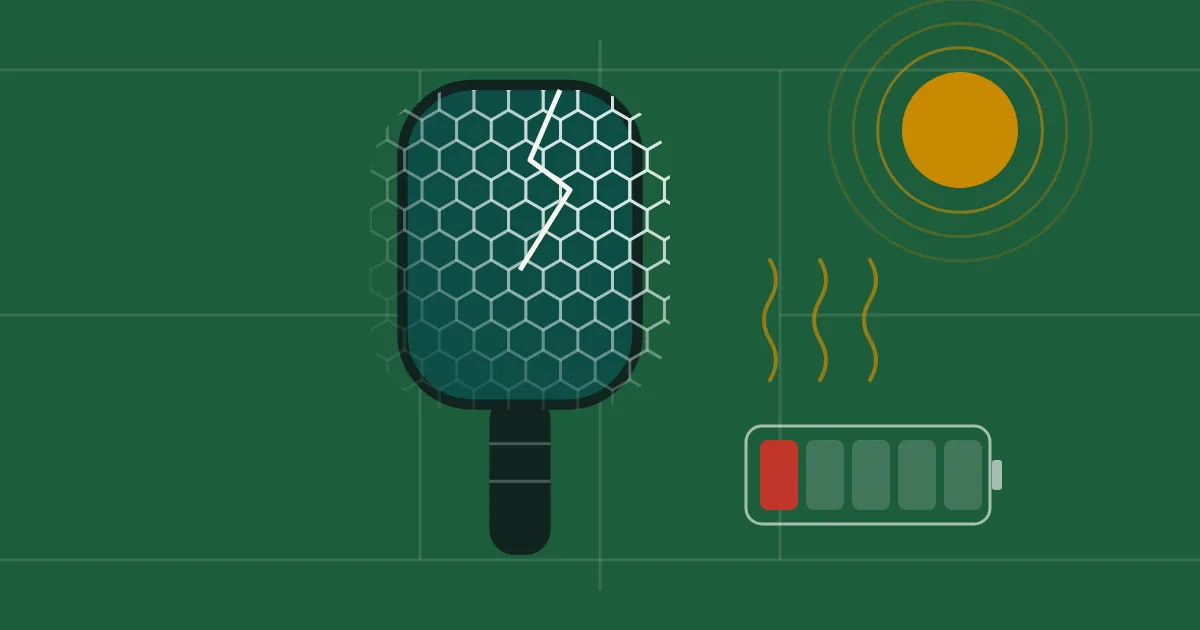
Every paddle wears out. The question is how fast, and whether the warranty covers it. These are the usual problems, as described by Pickleball Union and Pickleball Central:
- Core crush: the honeycomb in the sweet spot breaks down. You may hear a crunch when you press the centre with your thumb. The paddle can briefly feel more powerful, then duller. It’s normal wear.
- Disbonding: the face comes loose from the core. Signs are a trampoline feel, a higher “ping” and balls flying further than expected. It’s a defect.
- Delamination: the layers of the face separate, sometimes with bubbling or a peeling edge guard. It’s rare, but a paddle with delamination that breaks the surface fails the rulebook’s paddle standard (Rule 3.D.5.a).
- Worn grit: the face goes smooth and spin drops, as above.
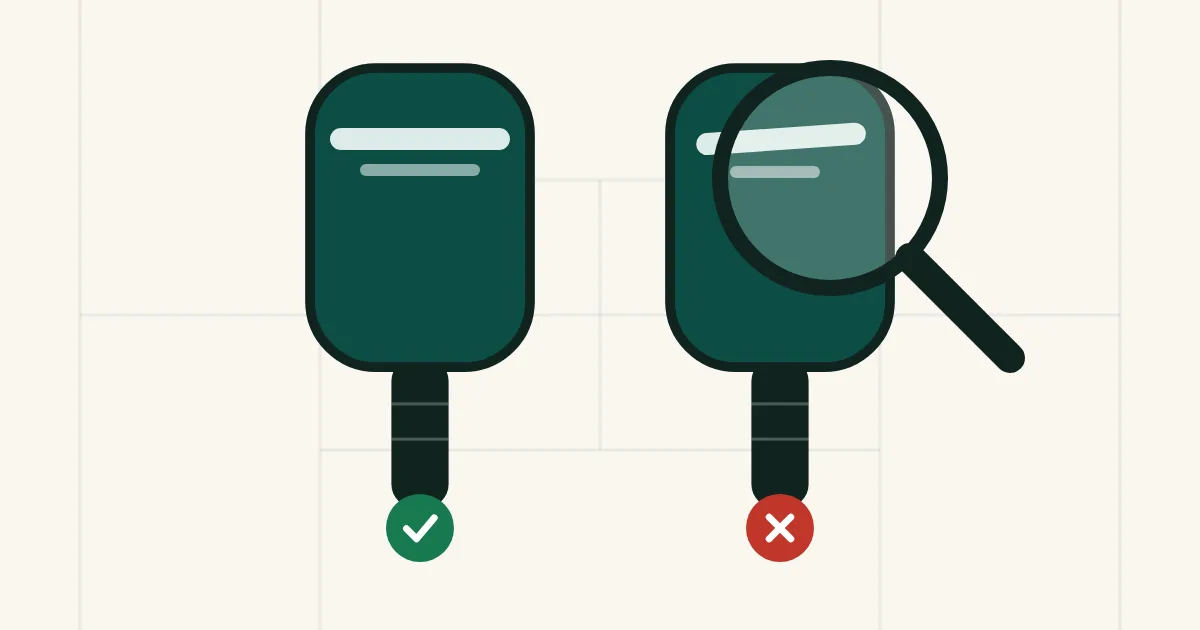
A simple check is the tap test. Tap the face all over with a coin or your knuckle. An even tone is normal; a change in tone across the face, or a hollow sound in one spot, suggests something has come loose.
How long a paddle lasts
Paddles typically last one to five years, according to Selkirk as quoted by Pickleball Union. Someone playing twice a month sits at the long end. Someone playing five times a week, hitting hard, may be at the short end, and may notice the grit fading within months.
Heat matters here
Heat weakens the resin that holds a paddle together. Every guide above says the same thing: don’t leave your paddle in a hot car. In our weather, a car parked in the afternoon sun is the easiest way to shorten a paddle’s life. Keep it in a cover and bring it inside with you.
Warranty is part of the price
Warranties vary more than people expect. At Picklefox, a Malaysian dealer, cover ranges from 60 days (Holbrook) and 90 days (Franklin) to six months (Selkirk, if registered) and a year (Gearbox, and JOOLA if registered). Claims there are for manufacturing defects only, need proof of purchase, and are replaced rather than refunded. Wear and tear isn’t covered.
A cheap marketplace paddle usually has no warranty worth claiming, and a fake has none at all. If you’re paying RM500 or more, ask how long the warranty is and who handles claims in Malaysia before you buy. Our guide on where to buy a pickleball paddle in Malaysia covers this, and how to avoid fakes.
When spending more is worth it
Worth it:
- You play three or more times a week, and your current paddle has gone dead or smooth.
- You’ve tried several paddles and know exactly what you want: more spin, more reach, a softer feel at the net.
- You’re entering tournaments and need a paddle on the approved list, with a warranty you can use.
- Your arm hurts and you want a paddle with a softer, more damping core, after checking your grip and technique with a coach.
Probably not worth it yet:
- You’ve played for less than a few months. Your technique will change more than any paddle can.
- You want a pro’s paddle because a pro uses it. Pros are usually sponsored by the brand, and their paddle suits their game, not yours.
- The main reason is power. A more powerful paddle can send more of a beginner’s shots long, not fewer.
Your next step: if you’re under six months in, spend RM100 to RM500, play a lot, and keep the receipt. Upgrade when you can name what your paddle is stopping you from doing.
Sources
- The Paddle Question Most Buyers Never Ask: How Long Will the Spin Last?, Pickleball Union (April 2026)
- Gen 5 Pickleball Paddles Are Here, Pickleball Union (updated September 2026)
- How Much of Paddle Performance Comes From Tech vs. Branding?, Pickleball Union (updated September 2026)
- Pickleball paddle troubleshooting, Pickleball Union (updated April 2026)
- How Long Do Pickleball Paddles Last?, Pickleball Union
- Understanding delamination in pickleball paddles, Pickleball Central
- 2026 USA Pickleball Official Rulebook, USA Pickleball (Rule 3.D.5)
- Warranty Policy and paddles, Picklefox (checked 10 October 2026)
- Pickleball paddle search, Decathlon Malaysia (checked 10 October 2026)
- Carlton WaveFlex Pickleball Paddle, Sports Direct Malaysia (checked 10 October 2026)
- Indoor pickleball courts in the Klang Valley, for heat and rainRead
- Where to play pickleball in Cheras: 11 venues with pricesRead
- Where to play pickleball in Ipoh: 11 venues with pricesRead
- Where to play pickleball in Johor Bahru (including for Singaporeans)Read
- Where to play pickleball in Kuala Lumpur: 20 venues with pricesRead
- Where to play pickleball in Kuching: 7 venues, plus MiriRead